Sunday, November 19, 2017

Kingdom Reformation Declaration of 2017


November 19, 2017


For years now, many of us have been feeling the need for a second reformation.  In just the past few weeks we celebrated the 500th anniversary of the first reformation.  While the first reformation gave birth to what we now know as the Protestant faith, we now feel that it’s time to take another step forward toward becoming more like the “spotless bride” we are destined to become.


For the first reformation to manifest into a sustainable movement, Martin Luther had to write down his thoughts and nail them to the door of the church.  It took this tangible outgrowth from his heart for something physical to happen.


For over a decade now God has planted the seeds in my heart for a new wine skin.  There are now some 8000 pages of journaled interaction between us over the subject.  Just the other day I heard a voice tell me that it was time to “write it down.”  In other words, it was time for me as a modern-day reformer to follow in the steps of Martin Luther to write down what is in my heart so that something synergistic can tangible happen in support of the physical implementation of creating this new model.  


Out of what I feel is obedience……….


Monday, February 29, 2016

Who is historicly always left to clean up our messes?


As Rivers Run Black in Peru, Indigenous Tribes Left Cleaning Big Oil's Disaster


Published on Tuesday, February 23, 2016 by Common Dreams


Indigenous people are struggling to clean up 3,000 barrels oil that have poured into the Chiriaco and Morona tributaries of the Amazon River. (Photo: Alessandro Currarino / El Comercio")

A disastrous spate of oil spills in the Peruvian Amazon have gone from bad to worse in recent days, leaving Indigenous tribes frantically trying to clean up the mess left by the nation's state-owned oil company.

The catastrophic ruptures in Petroperu's Northern Peruvian Pipeline occurred on January 25th and February 3rd and have threatened the water supply of nearly 10,000 indigenous people, says Amazon Watch.

Wednesday, February 24, 2016

How to put together a business plan

Business Planning 101


To begin, if you are a Christian, I suggest you pray and ask for guidance.  If you are from a background where God's only communication is the bible then this part may prove difficult.  The Bible in my opinion is the source of our discernment and litmus test for heavens communication, but it does not replace first person relationship with its author.  The role of the Holy Spirit is critical to your understanding the nature of God from the inside out.  A lot of what is done "in the name of Christ" sometimes has little if in come cases anything to do with God.  We like to feel religious and hope that others see us that way.  It makes us feel good about ourselves but it can be destructive to having a relationship with Christ.  All to say you need to make sure this is God's vision not your own fantasy.  There is a very big difference. 

A business plan is a methodology of organizing your thoughts into a format that will allow you to turn your ideas into a realistic picture.  It is a step by step process that can utilize the services of various professionals including, graphic designers, accountants, architects, and contractors.  It is not something that happens over night.  A well thought out business plan is a thing of beauty that often takes months of analysis.

Local resources


There are numerous blogs, internet sources, and software packages available.  you will need a working knowledge of Word and Excel to put together your narratives and spread sheets.  Make sure you are comfortable with what ever format you choose to use.

If you are fortunate to live near a local university with a business department, they often hold seminars or business fairs to help upstart entrepreneurs flesh out their ideas.  If they are available then make sure you compensate them well for helping you.  If you have God beside you, he will want to bless those who help put together His program.  Don't use people.  God pays his own way.

Friday, February 19, 2016

The Human and Environmental cost of our electronic addictions

E-waste:  Where does it go and how is it processed?


Despite long-standing restrictions on the export and import of electronic waste ("e-waste"), the industry is huge.


One town in particular, Guiyu, in South Eastern China, rose to fame after the non-profit organisation Basel Action Network exposed the huge amount of e-waste being dumped there. Sporadic coverage in the media has continued ever since, and in 2013 the town was recognised as the largest e-waste site in the world, although that undesirable title may now belong to Agbogbloshie, a suburb of Ghana's capital. Thousands of tonnes of e-waste makes its way to the dump from western countries after being illegally smuggled into the country.


Monday, February 8, 2016

Tesla's new power storage system for Home use.


Tesla's new battery could take your home off the grid


Tesla Motors invented this highly useful battery, that is the dream of everyone who would like to
switch to an off-the-grid living.  The battery is called PowerWall and was designed in order to entirely power one's home, without ever having to use the power grid again.  The system of the battery is based on the same one sued in the Tesla electric cars and it comes in two units:  7kWh or 10kWh.  The energy the PowerWall battery will store, has to come from solar or wind generators and the battery will keep running even if the grid does down.  You can order these batteries, starting in the summer of 2016.


Energy Storage for a Sustainable Home


PowerWall is a home battery that charges using electricity generated from solar panels or when utility rates are low, and powers your home in the evening.  It also fortifies your home against power outages by providing a backup electrical supply.  Automated, compact and simple to install, PowerWall offers independence from the utility grid and the security of an emergency backup.


Thursday, February 4, 2016

Slave labor in the Chocolate Industry


Beware of These 7 Popular Chocolate Brands that Exploit Child Slaves


Americans spend over a billion dollars every Halloween on chocolate, accounting for 10% of most chocolate company’s annual revenue. And the average American citizen eats over 11 pounds of chocolate a year. So this Halloween, use your money to let them know that child slavery will not be tolerated by American consumers.

Last September, a lawsuit was filed against eight companies – including Hershey, Mars, and Nestle – alleging that the companies were duping consumers into “unwittingly” funding the child slave labor trade in West Africa, home to two-thirds of the world’s cacao beans.

Worker ages range from 11-16 (sometimes younger). They are trapped in isolated farms, where they work 80 to 100 hours a week. The film Slavery: A Global Investigation spoke with freed children who reported that they were often beaten with fists and belts and whips.

The beatings were a part of my life,” Aly Diabate, a freed slave, told reporters. “Anytime they loaded you with bags (of cocoa beans) and you fell while carrying them, nobody helped you. Instead they beat you and beat you until you picked it up again.”
To help you avoid supporting slavery this Halloween, Here are seven chocolate companies that benefit from child slave labor:

Hershey
Mars
Nestle
ADM Cocoa
Godiva
Fowler’s Chocolate
Kraft

Monday, December 21, 2015

The IMF and World Bank: Partnership of explotation


The IMF and the WORLD BANK

The Thistle
Volume 13, no. 2, Sept 2000

This article is a bit dated, but the crisis in third world environments has only gotten much, much worst.  Those nations who were or are unable to service loans to the World Bank are selling off their natural resources to the multi-nationals who control the funding in both cases. 


Today, September 26, (2000) thousands of activists are protesting in Prague, in the Czech Republic, against the policies and institutional structures of the International Monetary Fund (IMF) and the World Bank. These protests are the latest action in a growing movement that is highly critical of the neoliberal economic policies being imposed on people all over the world, including those in western countries. As Robert McChesney concisely describes it, neoliberalism “refers to the policies and processes whereby a relative handful of private interests are permitted to control as much as possible of social life in order to maximize their personal profit.” The major beneficiaries of neoliberalism are large trans-national corporations and wealthy investors. The implementation of neoliberal policies came into full force during the eighties under Thatcher and Reagan. Today, the principles of neoliberalism are widely held with near-religious fervor by most major political parties in the US and Britain and are gaining acceptance by those holding power elsewhere.

Sugars effects on your liver

How Sugar Damages Your Liver

You won't believe the damage this sweetner poses to your detoxifying organ.

December 18, 2015


The supermarket is an awesome place to school your kids on healthy eating. But it can get heated if you happen to be in the cookie aisle. Recently, my son and I were rolling our cart past those sugary squares and disks and double-stuffed whatevers when he informed me that his friend gets seven cookies in his lunch every day. (My kids get two, max. After dishes and homework.)

I saw my opening. "Well, let me tell you about nonalcoholic fatty liver disease," I said. Too soon for a 12-year-old? Heck no! I'll tell you what I told him: Overdo the cookies or other sugary foods, and your liver takes the fructose hit. 

Located on the right side of your abdomen, tucked behind your lower ribs, your liver has a critical job: to turn toxins—both those formed naturally in the body and those that are man-made, such as from medications, street drugs, and alcohol—into harmless substances. 

The liver uses about 20 percent of the calories you consume to fuel itself and its work, which includes converting proteins and sugars from food into energy for your body, aided by insulin.

Tuesday, December 15, 2015

Hidding Sugar in your food supply

56 Different Names for Sugar

The efforts food manufacturers go to in order to hide added sugar from you is downright disturbing. Sugar is America's socially accepted addiction.


October 19, 2015


Monday, December 14, 2015

Palm Oil-The newest cost to western convenience-Part 3

Don't Let Your Shampoo and French Fries Destroy Tropical Forests

Empowered By


The Union of Concerned Scientists puts rigorous, independent science to work to solve our planet's most pressing problems. Joining with citizens across the country, we combine technical analysis and effective advocacy to create innovative, practical solutions for a healthy, safe, and sustainable future.


Palm Oil deforestation

About the Petition

Global fast-food and packaged-goods companies use palm oil to make everything from french fries to cosmetics to shampoo. But palm oil is a major driver of deforestation and global warming. As tropical forests are cleared to make way for palm oil plantations, carbon is released into the atmosphere, driving global warming and shrinking habitats for endangered species, including orangutans. Tropical deforestation accounts for about 10 percent of the world's global-warming emissions.

But producing deforestation-free palm oil is entirely possible. In the last year, many companies pledged not to buy from palm oil suppliers linked to the loss of tropical forests. The rest of corporate America should also make a firm commitment to use only deforestation-free palm oil.

Tell the largest global companies that for the sake of our air, tropical forests, and endangered species, they must commit to deforestation-free palm oil.

For more information on palm oil, corporations, and climate change, read Union of Concerned Scientists’ blog post on the issue, “Out With Duh-nuts, In With DO-nuts: Two Major Fast Food Brands Tackle Deforestation,” and our report, Fries, Face Wash, Forests: Scoring America's Top Brands on Their Palm Oil Commitments.

To: CEOs of America’s Largest Fast-Food and Packaged-Goods Corporations

Your company uses palm oil in many of its products—it’s an ingredient that has been linked to widespread tropical deforestation and climate change. As tropical forests are cleared and often burned to make way for palm oil plantations, carbon is released into the atmosphere, driving global warming and shrinking habitats for endangered species.

Your company continues to lag behind many global brands that have already committed to not buy from palm oil suppliers linked to the loss of tropical forests and carbon-rich peat swamps.
There's absolutely no excuse to use palm oil that could be driving climate change and tropical deforestation.

I urge you to bring your company in line with other major global corporations by creating and implementing a policy to use only deforestation-free palm oil in your consumer products.

Sincerely,
[Your name here] 

Hydraulic Fracture Drilling-Part 15

Texas Fracking Zone Emits 90% More Methane Than EPA Estimated

The Barnett Shale's emissions have been vastly underestimated, sweeping Environmental Defense Fund-backed study finds.
By Lisa Song, InsideClimate News
Dec 7, 2015


A sprawling, aggressive effort to measure the climate footprint of natural gas production has yielded striking results: methane emissions from the Barnett Shale in North Texas are at least 90 percent higher than government estimates.

That conclusion comes from a peer-reviewed study published Monday in Proceedings of the National Academy of Sciences. The paper is the most sweeping study to emerge from the Environmental Defense Fund's $18-million project to quantify methane leaks from the natural gas industry. It was written by 20 co-authors from 13 institutions, including universities, government labs, EDF and private research firms.

Overall, the two-year study found that methane emissions from the Barnett Shale are nearly twice as much as estimated by the Environmental Protection Agency's Greenhouse Gas Inventory, and 5.5 times the number from a separate global database.

Slave Labor in our food supply

Shrimp peeled by slaves tied to major US food outlets

If the truth is known, there are dire consequences to most products we find as "Cheap" in the US.  The cost of our lifestyle is enormous to the rest of the world.  How much longer will we be allowed to stick our proverbial head in the sand?  If justice is foundational to the throne of grace, how much longer are we going to get away with our ignorance? Its not ok....


© AP Photo/Dita Alangkara In this Monday, Nov. 9, 2015 photo, children and teenagers sit together to be registered by officials during a raid on a shrimp shed in Samut Sakhon, Thailand. Abuse is common in Samut Sakhon.


SAMUT SAKHON, Thailand — Poor migrant workers and children are being sold to factories in Thailand and forced to peel shrimp that ends up in global supply chains, including those of Wal-Mart and Red Lobster, the world's largest retailer and the world's largest seafood restaurant chain, an Associated Press investigation found.

At the Gig Peeling Factory, nearly 100 Burmese laborers were trapped, most working for almost nothing. They spent 16 hours a day with their aching hands in ice water, ripping the guts, heads, tails and shells off shrimp. One girl was so tiny she had to stand on a stool to reach the peeling table. Some workers had been there for months, even years. Always, someone was watching.

"They didn't let us rest," said Eae Hpaw, 16, her arms a patchwork of scars from shrimp-related infections and allergies. "We stopped working around 7 in the evening. We would take a shower and sleep. Then we would start again around 3 in the morning."

More than 2,000 trapped fishermen have been freed this year as a result of an ongoing Associated Press investigative series into slavery in the Thai seafood industry. The reports also have led to a dozen arrests, millions of dollars' worth of seizures and proposals for new federal laws.

Wednesday, December 2, 2015

65 Million have left the institutional Christian Church. What are they looking for?

Where Are People Leaving the Church Going?


Sociologist Josh Packard says that 65 million people have left the church. These are former leaders who love God. Where are they going?

Tuesday, December 1, 2015

They want you sick, over weight, and unaware

What Does the Bitter Battle Between Big Sugar and Big Corn Mean for Consumers?

A multibillion-dollar lawsuit between the two major sweetener industries has finally been settled.


The companies that sweeten our foods fight bitterly, if the years-long legal spat between big corn and big sugar is anything to judge by. Ever since the corn refiners tried to rebrand high-fructose corn syrup as “corn sugar” in 2010, the two industries have been warring over names, marketing, public health, and medical research. Now, thanks to a settlement announced late last week, the multibillion-dollar legal battle has come to an abrupt end before a jury can rule on the false-advertising claims made by the sugar industry.

Yuan receives Reserve Currency Status

Everything just changed for China's currency

Business Insider


The International Monetary Fund has officially designated the Chinese yuan a global reserve currency.


That means that it joins an elite group of currencies — the dollar, the yen, the euro, and the pound — in the Special Drawing Rights (SDR) basket.

This doesn't mean that money managers around the world will suddenly shift their holdings to the yuan. But this new designation does send an important message about its importance to the rest of the world.

Hydraulic Fracture Drilling- Part 14

Livestock falling ill in fracking regions


In the midst of the domestic energy boom, livestock on farms near oil- and gas-drilling operations nationwide have been quietly falling sick and dying. While scientists have yet to isolate cause and effect, many suspect chemicals used in drilling and hydrofracking (or “fracking”) operations are poisoning animals through the air, water or soil.

Earlier this year, Michelle Bamberger, an Ithaca, N.Y., veterinarian, and Robert Oswald, a professor of molecular medicine at Cornell’s College of Veterinary Medicine, published the first and only peer-reviewed report to suggest a link between fracking and illness in food animals.

Monday, September 28, 2015

Hydraulic Fracture Drilling-Part 13

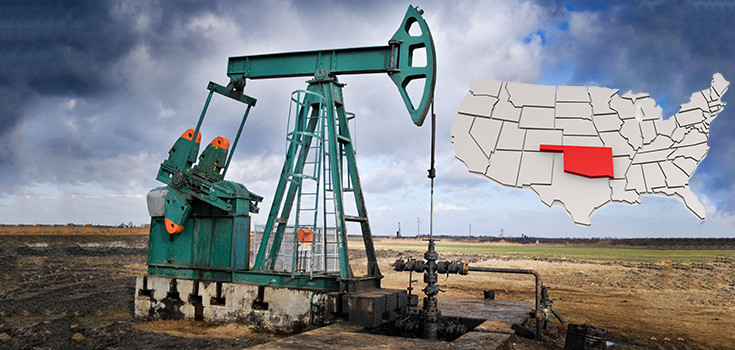
Fracking Increases Oklahoma Earthquakes from Two a Year to Two a Day

| September 21, 2015 11:21 am

Embedded image permalink

Oklahoma Sees 2800% Increase in Earthquakes over 5 Years, Likely Due to Fracking

Scientists have identified that the injection of wastewater byproducts into deep underground disposal wells from fracking operations are very likely triggering the major increase of seismic activity in the central U.S. state.

Oklahoma, which is not near any major fault lines, has felt 585 earthquakes that were a 3.0-magnitude or greater in 2014—three times the 180 quakes felt by California last year, the AFP reported. Last month alone, Oklahoma experienced more than 600 quakes that could shake homes and cars, with the town of Crescent hit hardest with a 4.5 whammy, the AFP said.


The Collapse of Middle East Oil is inevatable

Collapse of oil production is within sight.  What are we going to do about it?  Ignore the facts and assume its someone else's problem? 

Nafeez Ahmed
Monday 28 September 2015 10:37 UTC


On Tuesday 22 September, Middle East Eye broke the story of a senior member of the Saudi royal family calling for a “change” in leadership to fend off the kingdom’s collapse.
In a letter circulated among Saudi princes, its author, a grandson of the late King Abdulaziz Ibn Saud, blamed incumbent King Salman for creating unprecedented problems that endangered the monarchy’s continued survival.
“We will not be able to stop the draining of money, the political adolescence, and the military risks unless we change the methods of decision making, even if that implied changing the king himself,” warned the letter.
Whether or not an internal royal coup is round the corner – and informed observers think such a prospect “fanciful” – the letter’s analysis of Saudi Arabia’s dire predicament is startlingly accurate.
Like many countries in the region before it, Saudi Arabia is on the brink of a perfect storm of interconnected challenges that, if history is anything to judge by, will be the monarchy’s undoing well within the next decade.

Friday, September 11, 2015

The Quiet Crisis-The price for our success

‘A quiet crisis': The rise of acidic soil in Washington
 by Sylvia Kantor 


Gary Wegner first noticed the problem in 1991, when a field on his family’s farm west of Spokane produced one-fourth the usual amount of wheat. His father and grandfather attributed the problem to farming on shallow soils, but Wegner decided to dig deeper. Lab tests revealed a surprising result: the soil had become acidic.

Wheat farmers are now seeing this problem across the inland Pacific Northwest. The culprit, as far as anyone can tell, is the abundant use of synthetic nitrogen to increase crop yields, a practice that has otherwise revolutionized production over the past half century. Over time, however, it has contributed to a soil health problem that has farmers worried about the future of farming in the Palouse.

“We’re riding the edge of a crisis,” says Paul Carter, an agronomist and the director of WSU Extension in Columbia County. “We can pretty well nail it down to the addition of nitrogen to our soils for crops. In 1940 or 1950, nitrogen was applied at five pounds per acre. Now, in some areas, we’re up to 100 or more pounds per acre.”

Prepping for an economic melt down


Why the surging US debt should have you prepping for a fiscal crisis


CNBC

The U.S. national debt is on pace to rise to record levels vs. the U.S. economy, its only precedent being the debt levels reached in World War II, according to a new report from the Congressional Budget Office. However, the government paid off much of that debt in the middle of the last century and the U.S. saw its most economically prosperous years in the ensuing decades, whereas the current debt has been neglected, morphing into a festering wound.

While interest rates are unlikely to rise significantly in the near future, they could see a dramatic spike in the long term. According to the Congressional Budget Office, the rise in national debt will stagnate economic growth within 10 years.

A stagnant economy could retroactively drain government revenue and back the government into a corner of perpetual borrowing. Tapered spending or increased taxes could help us dodge a catastrophic economic meltdown. The CBO's report adopted common conservative arguments, warning that financial aid to the poor leaves them with no incentive to join the workforce while entitlement spending as a whole continues to depress the economy.

Although we should see slight improvement over the next couple of years as we climb out of the crater-sized hole George W. Bush left in his wake, things look much worse over the long haul. The CBO blames the bleak long-term economic outlook on large deficits that occurred under Obama's stimulus, as well as the many Americans leaving the labor force and taking refuge under the government's umbrella instead of making their own. The retirement of the baby boomers and the lack of motivation in the workforce will also hike up the debt burden by causing future deficits. The CBO believes that we'll see deficits as high as $1 trillion by 2025.

The CBO can make projections, but not even it knows for certain how high the debt can get before an economic meltdown ensues. However, there will come a time when investors lose trust in the United States' ability to pay back it's loans and will be forced to raise the interest rates they charge on them.


Interest rates are projected stay at very low levels for the foreseeable future. But when they increase, it will greatly effect federal spending. U.S. interest payments are expected to more than double in the coming decade, jumping from 1.3% of GDP to 3% of GDP. These seemingly small deviations in percentage points appear harmless, but they could have a dramatic effect on federal debt many years down the road. It's time for our government, and, more importantly, its people, to stop ignoring these numbers and display prudence in financial behavior.

With a Congress that refuses to tighten the lid on spending despite an unprecedentedly high national debt, it shouldn't come as a great shock if the debt continues to mount. It may require a fiscal catastrophe--per usual--to bring Washington down from cloud nine. It is imperative that you sleep with one eye open on your spending and saving habits, because taxes could see a spike parallel to that of our nation's debt.

Wednesday, August 5, 2015

Gene Drive Technology

'Gene drive': Scientists sound alarm over supercharged GM organisms which could spread in the wild and cause environmental disasters
Steve Connor Sunday 02 August 2015


The development of so-called 'gene drive' technology promises to revolutionize medicine and agriculture 

A powerful new technique for generating “supercharged” genetically modified organisms that can spread rapidly in the wild has caused alarm among scientists who fear that it may be misused, accidentally or deliberately, and cause a health emergency or environmental disaster.

The development of so-called “gene drive” technology promises to revolutionize medicine and agriculture because it can in theory stop the spread of mosquito-borne illnesses, such as malaria and yellow fever, as well as eliminate crop pests and invasive species such as rats and cane toads.

However, scientists at the forefront of the development believe that in the wrong hands gene-drive technology poses a serious threat to the environment and human health if accidentally or deliberately released from a laboratory without adequate safeguards. Some believe it could even be used as a terrorist bio-weapon directed against people or livestock because gene drives – which enable GM genes to spread rapidly like a viral infection within a population – will eventually be easy and cheap to generate.

There is no compelling evidence to suggest that genetically modified crops are any more harmful than conventionally grown food (Getty) “Just as gene drives can make mosquitoes unfit for hosting and spreading the malaria parasite, they could conceivably be designed with gene drives carrying cargo for delivering lethal bacterial toxins to humans,” said David Gurwitz, a geneticist at Tel Aviv University in Israel.  A group of senior geneticists have called for international safeguards to apply to researchers who want to develop gene drives, with strict security measures placed on laboratories to prevent the accidental escape of “supercharged” GM organisms that are able to spread rapidly in the wild.

Thursday, July 30, 2015

Palm Oil-The newest cost to western convenience-Part 2


Did slaves harvest the palm oil that went into your cookie?


Every major palm oil buyer has recently committed to end deforestation and human exploitation in the industry. Now that commitment is being put to the test. Cargill, Nestlé, and Procter & Gamble are all buying palm oil from a plantation in Malaysia that has trapped workers in slave-like conditions, The Wall Street Journal reports in a big investigative piece. Cargill says it will investigate, and we’ll be watching to see how it follows up.

The story follows 22-year-old Mohammad Rubel, who left his home in Bangladesh seeking a better life. Smugglers brought boatloads of people like him to Malaysia, where contractors send workers to plantations, while claiming generous portions of their wages:

“They buy and sell us like cattle,” said one 25-year-old Bangladeshi, who said he had been shunted among three contractors for six months without receiving any pay.

Living in huts in the forest far from stores, the workers often must buy supplies from contractors, who they say set artificially high prices that put workers in debt. One man said his contractor deducted 30% from his weekly pay when he took an hour off to attend Friday Muslim prayers.

Being in Malaysia illegally, workers such as Mr. Rubel see little they can do to change matters, especially since workers said their employers took away their passports. “There is no escape,” said Muhi, a migrant who identified himself with just one name. “They bring policemen and threaten to send us to jail.”

Efforts to reach labor contractors were unsuccessful. The migrant workers declined to identify their contractors, saying they feared deportation or physical harm. In the past, contractors have told rights groups they play an important role in meeting labor demand and sometimes hold workers’ passports for safekeeping. Most of this is illegal, though The Wall Street Journal does note that some of the workers interviewed for the story said that they don’t feel trapped and they are happy to be making more money than migrants working in other industries, like construction.
The plantation is run by “Felda Global Ventures, a semiautonomous company set up by Malaysia’s government,” and, though it’s the labor contractors who seem guilty of the most vile slaver behavior, the plantation is responsible for protecting the rights of its workers under Malaysian law, and Felda seems to be cutting corners of its own:

The minimum wage is 900 ringgit, or about $240, a month. Several workers interviewed, including some with legal documents, said their pay was often below the minimum. A number of recent pay slips seen by The Wall Street Journal, bearing Felda’s name, showed monthly payments of 700 to 800 ringgit.

The company said people have to work at least 26 days a month to qualify for the minimum wage. Workers said supervisors sometimes didn’t give them enough work to meet that threshold, although under Malaysian law, plantations must provide enough for full-time workers to make minimum wage. The fact that big multinationals have pledged to clean up their act when it comes to palm oil is a huge step forward — but anyone who thinks that will solve the problems is kidding themselves. It will take activist industry leaders, watchdog NGOs, and journalism like this to end the practices that allow predatory operators to exploit workers and make fortunes.  


Wednesday, July 29, 2015

Developing Sustainable Economies......or else......


Scientific model supported by UK Government Taskforce flags risk of civilization's collapse by 2040


by Nafeez Ahmed
 
New scientific models supported by the British government’s Foreign Office show that if we don’t change course, in less than three decades industrial civilization will essentially collapse due to catastrophic food shortages, triggered by a combination of climate change, water scarcity, energy crisis, and political instability.
 
Before you panic, the good news is that the scientists behind the model don’t believe it’s predictive. The model does not account for the reality that people will react to escalating crises by changing behavior and policies.
 
But even so, it’s a sobering wake-up call, which shows that business-as-usual guarantees the end-of-the-world-as-we-know-it: our current way of life is not sustainable.
 
The new models are being developed at Anglia Ruskin University’s Global Sustainability Institute (GSI), through a project called the ‘Global Resource Observatory’ (GRO).
 
The GRO is chiefly funded by the Dawe Charitable Trust, but its partners include the British government’s Foreign & Commonwealth Office (FCO); British specialist insurance market, Lloyds of London; the Aldersgate Group, the environment coalition of leaders from business, politics and civil society; the Institute and Faculty of Actuaries; Africa Development Bank, Asian Development Bank, and the University of Wisconsin.

Monday, July 27, 2015

Palm Oil-The newest cost to western convenience-Part 1

Palm Oil Is In Everything -- And It's Destroying Southeast Asia's Forests


Cultivating the product, found in most processed foods and cosmetics, kills animals and displaces people.


Tuesday, July 21, 2015

Mutant Flowers From Japan's Fukushima Nuclear Disaster


Four years after the disaster at Japan's Fukushima nuclear power plant, strange things still are happening to the plants and animals living there.

Recent years have brought reports of deformed fruit and mutant butterflies, but the latest is a remarkable photo of deformed daisies posted on Twitter by @san_kaido, who took the photo below in Nasushiobara City, which lies about 70 miles from Fukushima.

Translated from Japanese, @san_kaiod's tweet describes how the daisies growing there have apparently been impacted by exposure to radiation since the March 2011 incident, which resulted in the meltdown of three of Fukushima's six reactors following a devastating tsunami:

"The right one grew up, split into 2 stems to have 2 flowers connected each other, having 4 stems of flower tied beltlike," according to Fukushima Diary. "The left one has 4 stems grew up to be tied to each other and it had the ring-shaped flower. The atmospheric dose is 0.5 μSv/h at 1m above the ground."

The last sentence from the tweet -- about the radiation dose now being "0.5 μSv/h at 1m above the ground" -- describes the radiation dose per hour that's now present at the site where the photo above was taken. It's classified as safe for "medium to long term habitation" according to this explanation of radiation levels.

That no doubt played a part in the Japanese government's recent decision to allow more than 7,000 residents of a town near the Fukushima plant to return home, four years after being evacuated. As the London Telegraph learned, however, it's unclear how many residents actually will go back to live there permanently.

"There are no shops. There are no doctors. I don't know what to do," one former resident told local Japanese media.

Friday, July 17, 2015

Creating matter out of light-The Nature of God's Creation

Matter will be created from light within a year, claim scientists


In a neat demonstration of E=mc 2, physicists believe they can create electrons and positrons from colliding photons

Researchers have worked out how to make matter from pure light and are drawing up plans to demonstrate the feat within the next 12 months.

The theory underpinning the idea was first described 80 years ago by two physicists who later worked on the first atomic bomb. At the time they considered the conversion of light into matter impossible in a laboratory.

But in a report published on Sunday, physicists at Imperial College London claim to have cracked the problem using high-powered lasers and other equipment now available to scientists.

"We have shown in principle how you can make matter from light," said Steven Rose at Imperial. "If you do this experiment, you will be taking light and turning it into matter."

The scientists are not on the verge of a machine that can create everyday objects from a sudden blast of laser energy. The kind of matter they aim to make comes in the form of subatomic particles invisible to the naked eye.

The original idea was written down by two US physicists, Gregory Breit and John Wheeler, in 1934. They worked out that – very rarely – two particles of light, or photons, could combine to produce an electron and its antimatter equivalent, a positron. Electrons are particles of matter that form the outer shells of atoms in the everyday objects around us.

But Breit and Wheeler had no expectations that their theory would be proved any time soon. In their study, the physicists noted that the process was so rare and hard to produce that it would be "hopeless to try to observe the pair formation in laboratory experiments".

Oliver Pike, the lead researcher on the study, said the process was one of the most elegant demonstrations of Einstein's famous relationship that shows matter and energy are interchangeable currencies. "The Breit-Wheeler process is the simplest way matter can be made from light and one of the purest demonstrations of E=mc2," he said.

Writing in the journal Nature Photonics, the scientists describe how they could turn light into matter through a number of separate steps. The first step fires electrons at a slab of gold to produce a beam of high-energy photons. Next, they fire a high-energy laser into a tiny gold capsule called a hohlraum, from the German for "empty room". This produces light as bright as that emitted from stars. In the final stage, they send the first beam of photons into the hohlraum where the two streams of photons collide.

The scientists' calculations show that the setup squeezes enough particles of light with high enough energies into a small enough volume to create around 100,000 electron-positron pairs.

The process is one of the most spectacular predictions of a theory called quantum electrodynamics (QED) that was developed in the run up to the second world war. "You might call it the most dramatic consequence of QED and it clearly shows that light and matter are interchangeable," Rose told the Guardian.

The scientists hope to demonstrate the process in the next 12 months. There are a number of sites around the world that have the technology. One is the huge Omega laser in Rochester, New York. But another is the Orion laser at Aldermaston, the atomic weapons facility in Berkshire.

A successful demonstration will encourage physicists who have been eyeing the prospect of a photon-photon collider as a tool to study how subatomic particles behave. "Such a collider could be used to study fundamental physics with a very clean experimental setup: pure light goes in, matter comes out. The experiment would be the first demonstration of this," Pike said.

Andrei Seryi, director of the John Adams Institute at Oxford University, said: "It's breathtaking to think that things we thought are not connected, can in fact be converted to each other: matter and energy, particles and light. Would we be able in the future to convert energy into time and vice versa?"

Sunday, July 12, 2015

The Truth about Money-What you need to know


The truth is out: Our currency is just a shell game  


The Bank of England's dose of honesty throws the theoretical basis for austerity out the window
 
British banknotes – money
 
 
'The central bank can print as much money as it wishes.'
Photograph: Alamy

Friday, July 10, 2015

Hydraulic Fracture Drilling-Part 12

Investors pushing for methane emissions rules now worth $1.5 trillion


California public school teachers and religious charities. New York police officers and firefighters. A college endowment. What do all of these groups have in common?

They happen to be investors representing $1.5 trillion in assets under management for retirees and workers – and they’re calling for strong rules to limit harmful methane emissions from the oil and gas sector.

This level of outpouring – from diversified wealth managers with holdings in the oil and gas industry, to boot – represents investments worth five times the support such stakeholders expressed for methane rules last year.

A trend is emerging.

The investors, including the largest retirement funds in California and New York, issued a powerful statement in support of President Obama’s proposal to cut the greenhouse gas by 45 percent in a decade.

Methane is the primary ingredient in natural gas and also a powerful climate pollutant: For the first 20 years after being released it has more than 80 times the warming power of carbon dioxide and it’s responsible for 25 percent of the warming we’re facing today.

From their vantage point as long-term fiduciaries, the serious threat methane poses to climate stability compels these major investors to support action to cut emissions.

As they say in their letter, methane rules will help avoid near-term “infrastructure and economic harm that will weaken not only the companies we invest in, but the nation as a whole.”

Hydraulic Fracture Drilling-Part 11

Opinion: Dirty Little Secret About Natural-Gas Fracking: Fugitive Methane Emissions


July 10, 2015


According to recent research, the global-warming impact of FMEs is two-thirds greater than coal’s over the near term


Credit: Amanda Brown
R. William Potter

In energy circles, conventional wisdom holds that natural gas is the ideal clean and cheap “transition fuel.” TV ads tell us that gas is the bridge from the fading era of fossil fuels to a newly emerging sustainable future based on renewable energy (solar and wind).

Don't believe it.

As so often is the case, what passes as conventional wisdom turns out on closer inspection to be flat-out wrong or at best half true. In fact, available data and numerous studies now show that natural gas -- depending on its source -- can be as bad if not much worse for planetary health than coal, the usual nemesis.

When natural gas's impacts on the environment are measured only at the point of consumption, gas is both cheaper and cleaner than burning coal to produce electricity. As gas-industry advertisers intone, “natural gas has half the CO2 footprint of coal” or “clean-burning gas has half the carbon footprint of coal.”

True enough at the burner tip. But when gas is measured across the entire fuel cycle -- from drilling, extraction, and transmission through rapidly-built pipelines to the burner tip, a very different, and potentially ominous picture emerges.

The problems start with the production segment of the fuel cycle. Increasingly, new sources of gas come from fracking. This process drives chemicals and water through wells at very high pressure to split open (fracture) sedimentary rock, trapping gas fields that can be forced to the surface.

Fracking is rapidly becoming the new source of gas for New Jersey utilities, arriving here from hundreds of wells across Pennsylvania’s Marcellus shale formations, where a frenzy of drilling is leading to hurried efforts to lay pipelines across both states, generating a great deal of opposition along the way.

Fracking can pollute local groundwater, residential wells, and waterways -- besides triggering earthquakes, as in Oklahoma – while also fouling the air. Much worse, however, the process releases fugitive methane emissions (FMEs), a major contributor to global warming and climate change that is threatening to everyone.

How bad is FME? Worse than burning coal in the near term. That’s because methane gas remains suspended in the atmosphere for “only” 10-20 years, compared with carbon dioxide), the major greenhouse gas by volume from coal, which stays airborne for a century or more.

When measured over a two-decade period, methane pollutants do far more climate damage than carbon. The estimates of FME impacts over that 10-20 year period vary from a low of 70 percent of coal (according to the natural-gas industry) to a high of 400 percent greater than the carbon footprint of coal, according to independent researchers at the NASA Goddard Space Institute. If we average the published estimates, natural gas has a global-warming footprint that’s 167 percent of coal’s -- or two thirds greater impact over the near term.

(There is a short informative video on methane and its role in global warming available online, featuring Dr. Drew Shindell, a leading climate scientist formerly with Goddard and now at Duke.)